|

The Jewish Community of
Cochin
 |
Main street of "Jew Town", Cochin, India, 1970's.
The "Paradesi" Synagogue is at the end of the street on the left.
Photo: Richard Lobell, New York
Beth Hatefutsoth - Visual Documentation Center
A town and former State of the Malabar Coast,
latter part of the State of Kerala, South West India.
The Jews of the area are divided into three groups
“White Jews", “Black Jews” and "Meshuchrarim" (or Freedmen). The White Jews
(called "Paradesi", foreigners) are a mixture of Jewish exiles from
Cranganore and (later) Spain, Aleppo, Holland and Germany. They follow the
Sephardi rite with some Ashkenazi forms.
The Black Jews have separate synagogues from the
whites.
The third group, the Meshuchrarim, were manumitted
slaves and their offspring were attached to either of the two communities
but had no rights (until 1932) to sit in the synagogue or be called to
assist in the services (except on Simchat Torah). Influenced by the Indian
caste system, the three groups do not intermarry.
The earliest evidence of the settlement of Jews on
the Malabar Coast is given by two copper plates in the possession of the
congregation of the White Jews. The text of this inscription can now be
definitely established as dating to no earlier than 974 and no later than
1020.
Benjamin of Tudela, in his account of India
(c.1170), apparently states that there were in this region about 1,000 Jews,
black like their neighbors, who meticulously observed the Torah and, besides
the Bible, knew a little of the Oral Law.
Two waves of Jewish immigration converged on
Cochin in the early decades of the 16th century: firstly, Jews
who came from Cranganore (Shinkali), the original Jewish settlement on the
Malabar Coast, after its destruction by the Portuguese about 1524, and
secondly Jews and New Christians, from Spain and Portugal. The Jewish
traveler from Yemen, Zechariah al-Dahiri (c. 1550) in his Sefer ha-Musar,
says that he "met with many Jews in Cushi" (Cochin) where he stayed for
three months. In a legal inquiry regarding the status of the Black Jews and
Meshuchrarim made to David ben Solomon Ibn Abi Zimra and Rabbi Jacob ben
Abraham Castro in Alexandria around 1600, the number of Cochin Jews was
given at about 900 householders.
Under the Portuguese rule (1502-1663), the Jews of
Cochin could not have survived had it not been for the protection and
liberty afforded them by the Rajah of Cochin, who welcomed the new Jewish
immigrants, allotted them land to build their homes and synagogues - in the
proximity of his own palace in Mattancheri, now known as Jew town - and
granted them religious and cultural autonomy. He appointed a hereditary
Mudaliar ("chief") from among the Jews as their recognized spokesman and
invested him with special privileges and prerogatives and with jurisdiction
in all internal matters of the communal organization of the Cochin Jews,
though without any political power. This office continued in force under the
Rajah and even the Dutch. The first Mudaliar is said to have been Baruch
Joseph Levi of Cranganore, who was succeeded by his son, Joseph Levi. The
title and position of the Mudaliar was then acquired by the Castiel family.
The Jews of Cochin repaid the benevolence of the Rajah by helping him in his
military struggles with neighboring enemies, earning a reputation as
courageous and loyal fighters. They refused, however, to go to battle on the
Sabbath. Most of the Mudaliars became the Rajah's close advisers, and
assisted him in diplomatic and economic affairs.
|

Preparing for performance in a Hindu temple, Kerala, India.
Photo: Suzon Fuks.
Beth Hatefutsoth Visual Documentation Center |
The Dutch period lasted from 1663-1795. That the Dutch forces were
able to retreat without loss on the failure of their first attempt to
capture Cochin in 1662 was due to the courage of a certain Cochin Jew.
The Portuguese forces took revenge by plunder and massacre, burning
Jewish books and records, synagogues and homes. The Jewish inhabitants
fled to the highlands and returned only after the final conquest of
Cochin by the Dutch in the following year. |
Dutch rule offered the Jews complete cultural
autonomy and religious freedom; it also broke their isolation from the rest
of the Jewish world. In 1686, the Portuguese community in Amsterdam
dispatched a delegation to Cochin, headed by Moses Pereira de Paiva, to
visit the Jewish community and to collect data on its history and way of
life. The visitors made a considerable impact on the Jewish community,
mainly because of a consignment of Hebrew books that they brought for the
community. The 15th of Av, the day of their arrival, was celebrated as a
festival in Cochin. The close contact between the Jews of Amsterdam and
Cochin lasted throughout the 125 years of Dutch rule over Malabar. Dutch
rule also brought unparalleled prosperity to the Jews. The records of the
Dutch East India Company of the 18th century in The Hague and in the Indian
Archives provide abundant documentary evidence on the emergence of a class
of Jewish merchants, bankers, leaders in diplomacy, negotiators, and
interpreters. Outstanding were the Rahabi, Rotenburg and Surgun families and
Samuel Abraham. In the 17th century Moses de Pereira listed 465 Malabar
Jews, and found there nine synagogues, three in Cochin, two in Angicaymal
(now Ernakulam), and one each in Parur, Palur, Chenotta (Chennmangalam), and
Muttam (Madatankil).Nearly a century later, the Dutch governor A. Moens
(1781) mentions 422 families, or about 2,000 persons. The Cochin community
maintained close contact with Jewish communities outside India as well as
with the Jewish settlements within India. However, the closest contacts were
maintained with the Amsterdam Jews, who provided them with books and
learning.
Most of the published writings of the Cochin Jews
were printed in Amsterdam, like for example the Seder Tefilot (Amsterdam,
1757); this was later republished under the name Chuppat Chattanim (1769,
1842, and 1917). The first Hebrew printing press in India was founded in
Calcutta in 1840-41 by a native of Cochin, Eliezer ben Aaron Saadiah Arakie
ha-Kohen (b. 1800). Between 1841 and 1856 he produced about 28 books of a
halakhic, liturgical, and literary nature. Like all oriental Jews, those of
Cochin were imbued with a strong messianic spirit. Shabbetai Tzevi, in the
17th century, found an echo even in this remote corner of the Diaspora. A
close contact between Cochin and the Holy Land was established from the
middle of the 18th century, through emissaries from Eretz Israel. The Cochin
Jews showed their sympathy with the emerging modern Zionist movement under
Theodor Herzl, in a letter wishing Herzl success, written in Cochin in 1901
by Naphtali Eliahu Rahabi (Roby). In 1923, the first Zionist organization
was founded in Cochin, and the Jews sent representatives to the Zionist
Federation in London and even appointed I. Zangwill as their representative
to one of the Zionist congresses, being themselves unable to send a
delegate.
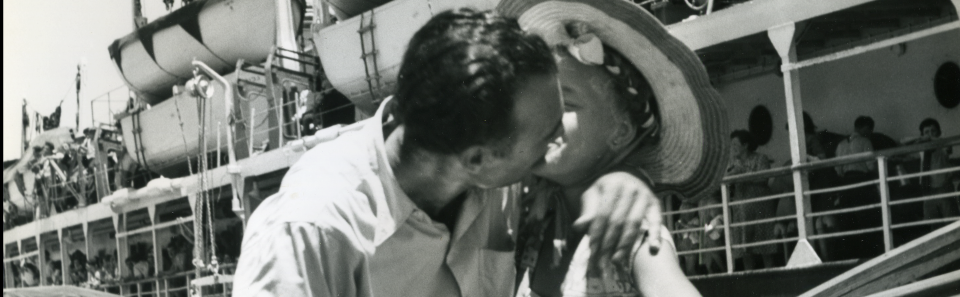
In 1948, most of the 2,500 Jews that lived in
Cochin emigrated to Eretz Israel leaving less than 100 there. The
magnificent 16th century Paradesi synagogue in Cochin still exists.
In 1970, the Jews from Cochin in Israel numbered
approximately 4,000.The magnificent 16th century Paradesi synagogue in
Cochin is still in use.
In 1997, there were 6,000 Jews living in India,
most of them in and around Bombay. The magnificent 16th century Paradesi
synagogue in Cochin still exists.
|