Born in Viznevo, Lithuania, he was taken as a child to
Frankfurt on Main, Germany, and was early influenced by Zionism. He
had a broad general education, spoke several languages and attended
Heidelberg University where he obtained doctorates in law and in
philosophy.
During World War I he joined the propaganda division of the
German Foreign Ministry in Berlin. After the War Goldmann worked as
a journalist, established the Eshkol publishing house and - together
with Jacob Klatzkin - launched and edited the German-language
Encyclopedia Judaica of which ten volumes appeared before being
stopped by the Nazis.
Active in Zionist work, in 1934 he was appointed Jewish
Agency representative at the League of Nations in Geneva. He worked
to establish the World Jewish Congress and at its foundation in 1936
was elected chairman of its executive.
Goldmann was deeply involved in activities to help Jewish
refugees in the 1930s. In 1940 he moved to the US where he was
involved in the political work of the Jewish Agency and from 1949
was president of the World Jewish Congress. In 1956 Goldmann was
also elected chairman of the Jewish Agency and president of the
World Zionist Organization, becoming the foremost figure in Jewish
political life.
Among his achievements were the negotiations of the
Reparations Agreement with Germany; the establishment of the
Conference of Major Americans Jewish Organizations; activity on
behalf of Soviet Jewry; and initiatives leading to the publication
of the 16-volume English-language Encyclopaedia Judaica and the
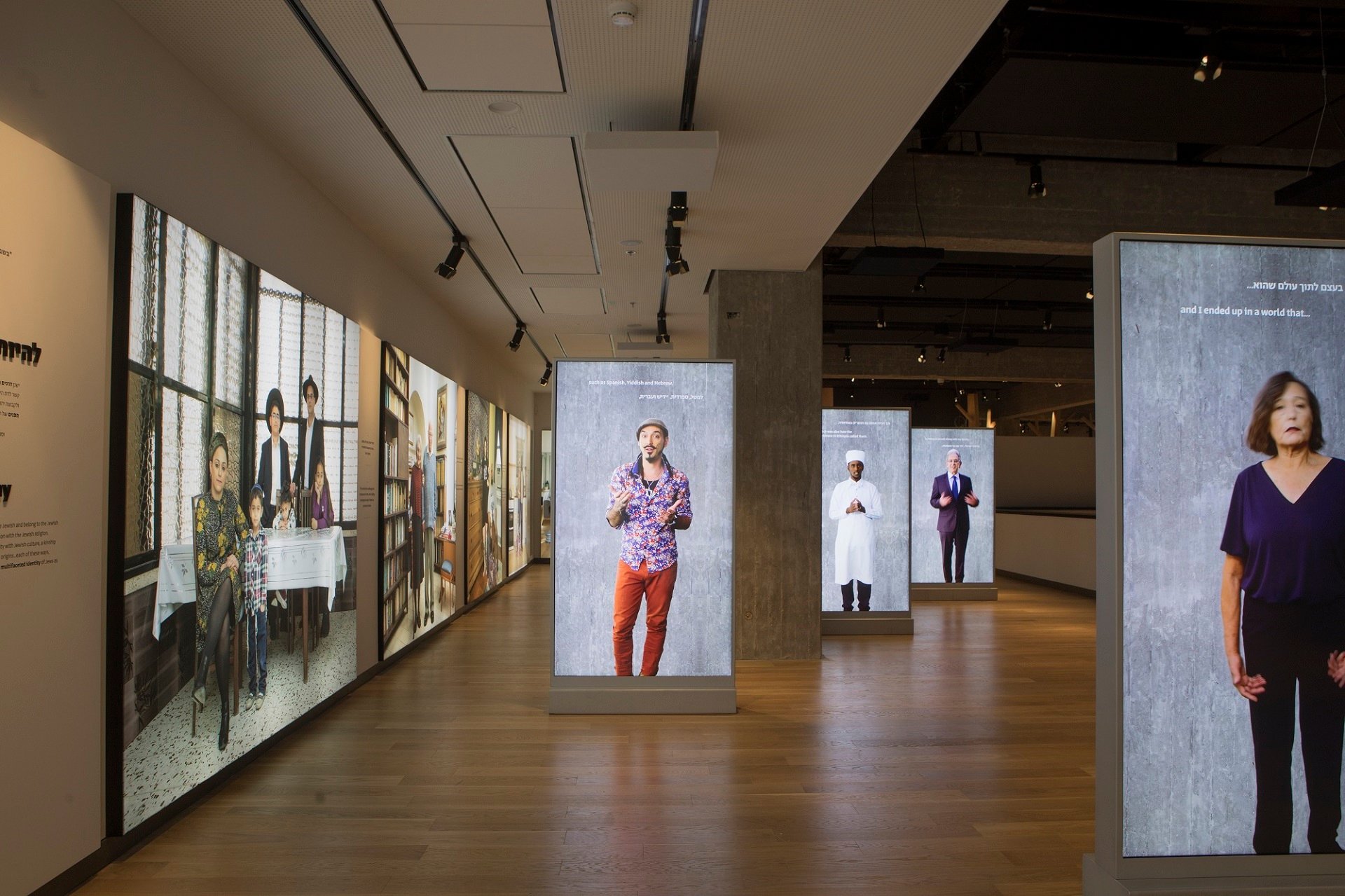
establishment of Beth Hatefutsoth - The Museum of the Jewish
Diasporain Tel Aviv. In his later years he lived in Israel and
Switzerland.
Bibliography:
Nahum GOLDMANN: The Jewish
Paradox. Pp. 218. London: Weidenfeld and Nicolsin, 1978
Nahum GOLDMANN: Memories.
Pp. VIII, 358, [16] plates. London: Weidenfeld and Nicolson, 1970
Patai RAPHAEL: Nahum
Goldmann, his missions to the Gentiles. Pp. VII, 315.
University ALA: University of Alabama Press, 1987
Links:
Nahum Goldmann
The Zionist Exposition